
The challenge is not finding people willing to click an invite. It is finding testers whose devices, context, and behavior can answer your release questions.
Learning how to find beta testers is a matching problem, not a traffic problem. A large audience can produce weak feedback when testers do not resemble the target users, own the required devices, or have time to complete the mission.
The right beta testers use the app in relevant conditions and can explain what happened with enough evidence for a product or engineering team to act. This guide shows how to define that audience, recruit through the right channels, screen efficiently, and keep the group engaged through retesting.
What makes a useful beta tester?
A useful tester does not need to be a quality assurance professional. They need the right context and a clear assignment.
Strong testers usually have four qualities.
- They resemble a real or strategically important user.
- Their device and environment cover a release risk.
- They can complete the mission within the testing window.
- They can describe the expected result, actual result, and steps that led to the problem.
Enthusiasm helps, but relevance matters more. A technically advanced tester can miss the onboarding confusion that affects a first time customer. A new user can reveal discoverability problems but may not explore advanced edge cases. Recruit a deliberate mix.
Define your ideal beta tester
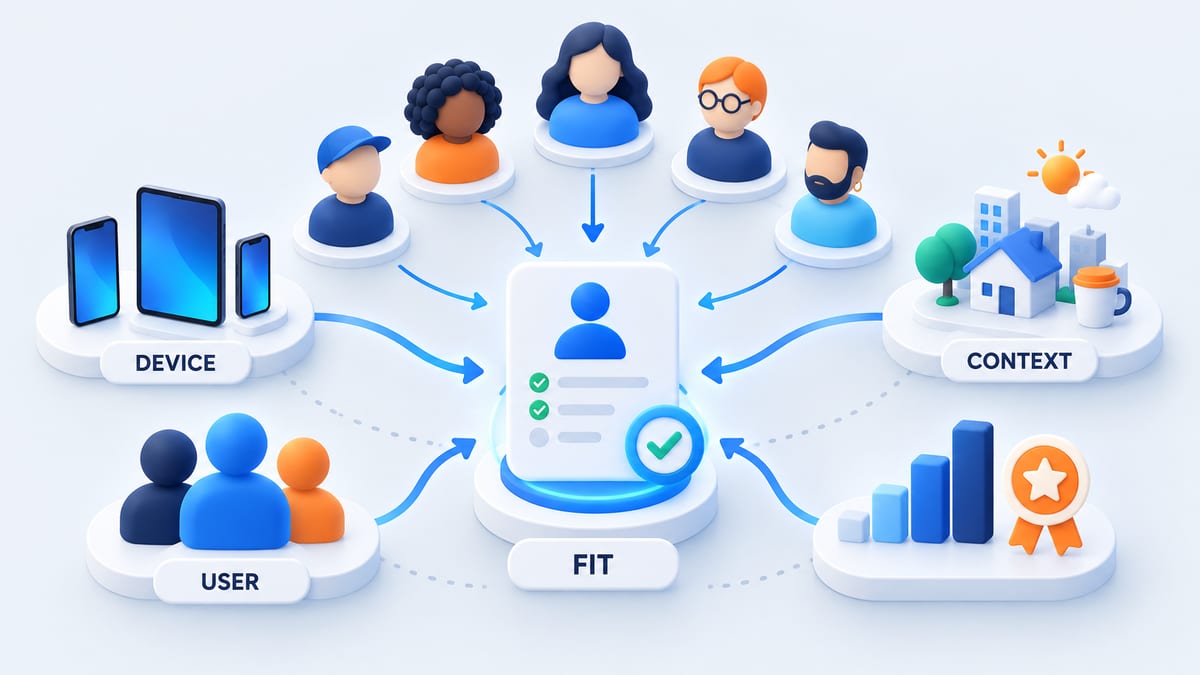
Start with the release decision. If the team needs to validate a low bandwidth upload flow, the ideal tester must encounter that network context. If the question concerns a redesigned professional workflow, recruit people who already perform that job.
Describe the ideal beta tester using only fields that change the testing decision.
- User fit such as role, experience, goal, and whether they are new or returning
- Device fit such as platform, model, operating system, screen size, and relevant hardware
- Context fit such as country, language, network, accessibility settings, and real world setting
- Participation fit such as availability, task length, communication language, and ability to share safe evidence
Avoid collecting personal data simply because it might be interesting. Explain why each screening field is needed, how it will be used, and what the tester should never include in screenshots or recordings.
Decide how many testers to recruit
Recruit from the coverage matrix rather than choosing a round number first. List the combinations that can change behavior, then assign at least one qualified person to each high risk segment. Add redundancy for critical journeys and for likely drop off.
Invitation count is not participation. Some people will miss the email, fail to install, or run out of time. Track joins, installations, mission starts, completions, actionable reports, and retests separately. This shows whether the problem is recruitment, onboarding, or the task itself.
For Google Play production access, some newer personal developer accounts currently need at least 12 testers continuously opted into a closed test for 14 days. That is a platform threshold, not proof of broad product quality. Confirm your account requirements in the official Google Play guidance.
Where to find beta testers
Use more than one source because each channel contributes a different tester profile.
Existing customers and active users
Existing users already understand the problem and can compare the beta with the current experience. Invite a targeted segment through email, an in app message, customer success, or support follow up. Do not expose an unstable build to the whole customer base.
Product waitlist and early access list
A waitlist contains people who have already shown intent. Ask a short screening question when they join so device, use case, and availability are known before the beta begins. Set expectations clearly because early access is still testing, not guaranteed production service.
Focused online communities
Relevant forums, professional groups, Discord servers, subreddits, and local communities can reach niche audiences. Read the community rules before posting. Explain the product, required profile, time commitment, privacy boundary, and reward. Do not disguise recruitment as an independent recommendation.
Customer interviews and support conversations
People who recently described a problem often make thoughtful testers for a fix or redesigned workflow. Ask whether they want to join a future round rather than adding them automatically. Keep product research consent separate from marketing consent.
Platform testing links
TestFlight public links can support broader iOS recruitment and may restrict device or operating system criteria. Public link testers can appear anonymously in App Store Connect. Google Play supports controlled and open testing tracks. These links distribute builds, but the developer still needs a recruitment message and a feedback process. Review the TestFlight invitation options and Google Play testing tracks before publishing access.
A dedicated beta testing platform
BetaRoast brings the testing mission and interested testers into one workflow. Create a round with the target user, platform, device requirements, task, expected evidence, deadline, and reward when applicable. Precision helps the right people self select and reduces irrelevant applications.
Build a beta tester recruitment funnel
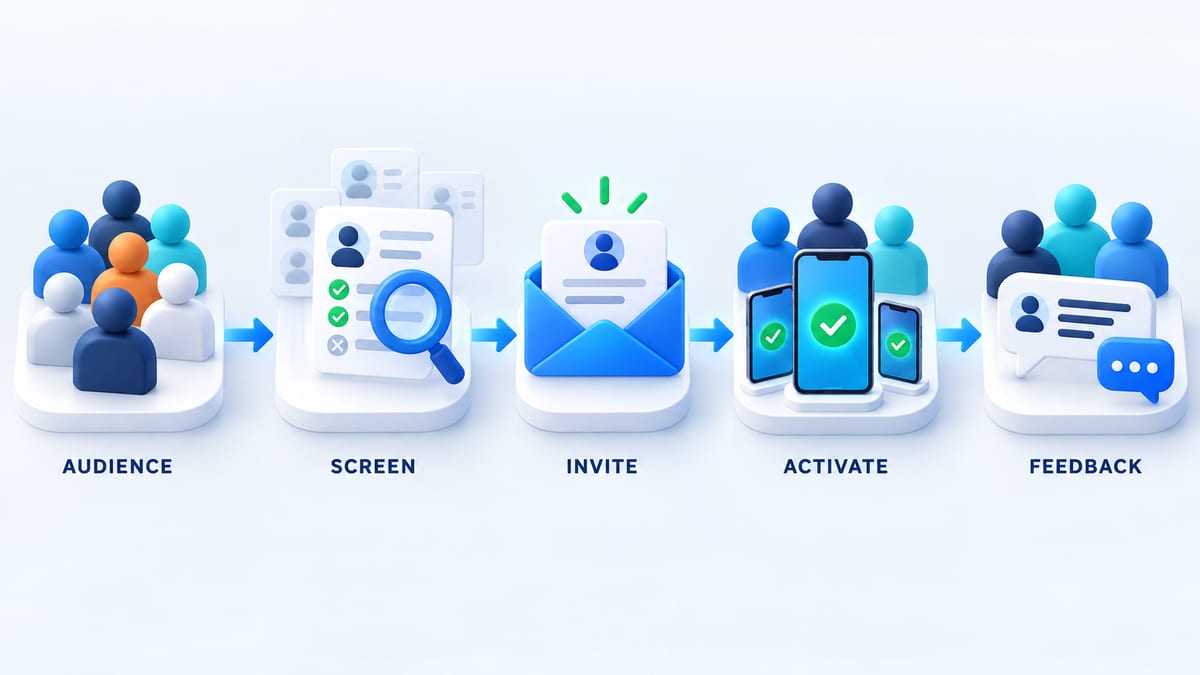
Treat recruitment as a product funnel with five stages.
Reach a relevant audience
Choose channels where the target users already spend time. Tailor the message to their motivation. Existing customers may care about improving a workflow. Community members may value early access. Professional testers may expect clear compensation.
Screen for fit
Use a short form with essential questions only. Confirm platform, device, operating system, user context, country or locale when relevant, availability, and any specialist experience. Rejecting a poor fit early respects the applicant's time.
Send a complete invitation
State who is running the test, what the app does, which build channel is used, the task, estimated time, deadline, feedback format, privacy expectations, support contact, reward, and completion conditions.
Activate with one small success
The first mission should verify installation and one meaningful action. Keep it short. If a tester cannot complete onboarding, capture that failure immediately instead of letting them disappear from the round.
Convert activity into feedback
Prompt testers at the moment when details are fresh. Ask for device, build, steps, expected result, actual result, impact, and safe evidence. Acknowledge the report and tell the tester whether it needs more detail or will return for retesting.
Write an invitation that earns trust
Use direct language. Avoid hype and vague requests to try something cool.
A strong invitation explains the audience fit, the task, the time required, the build platform, the testing window, the feedback expected, the reward, and the privacy boundary. Mention known instability when it can affect the tester's device or data.
Do not call a reward guaranteed if payment depends on completion or report quality. State the criteria before installation. Never ask testers to buy gift cards, transfer money, share account passwords, disable device security, or install an unexplained profile.
Screen testers without creating friction
Keep the screening form short enough to finish on a phone. Use conditional questions so an iOS tester does not see Android fields and a consumer tester does not see irrelevant business questions.
Verify technical details after selection. Ask for the exact device and operating system shown in settings, not an estimate. For a closed Google Play test, confirm that the invited Google account is the one used in Play Store. For TestFlight, explain the invitation or public link flow before the round begins.
Collect the minimum personal information required to operate the round. Store access links and participant data in tools with appropriate permissions. Provide a private route for security reports and sensitive screenshots.
Choose free or paid beta testers
Volunteer testing works when people already care about the product, community, or early access. Payment becomes more important when the audience is difficult to recruit, the session is long, specialist knowledge is required, the tester must attend at a fixed time, or the task requires repeated rounds.
Rewards can include cash, account credit, extended access, gift cards from a legitimate program, or public recognition with consent. Match the reward to the effort and local rules. Payment should reward participation and required evidence, not only positive feedback.
Keep beta testers engaged
Engagement improves when the round feels finite and responsive.
- Send one clear mission instead of a long feature list.
- Use a deadline with the tester's timezone.
- Acknowledge useful reports quickly.
- Ask focused follow up questions while the context is fresh.
- Share concise release notes when a new build arrives.
- Return fixed issues to the tester who found them.
- Close the round and explain what the team learned.
Do not overwhelm testers with daily reminders. Contact people when there is a useful action, a changed build, or an approaching deadline.
Avoid low quality recruitment
Warning signs include a sudden group of applicants with identical answers, devices outside the requested matrix, copied feedback, screenshots from the wrong build, reports with no reproduction path, and accounts focused only on rewards.
Reduce noise with a short qualification task, unique build information, clear evidence requirements, and limits on duplicate submissions. Do not remove unusual findings just because they are rare. Verify them against the environment and user impact first.
Beta tester recruitment checklist
- Write the release question and coverage matrix.
- Define the ideal user, device, context, and availability.
- Choose two or more relevant recruitment channels.
- Publish a transparent invitation with the task and reward.
- Screen only for information that affects selection.
- Over recruit carefully for expected participation drop off.
- Verify installation with one small activation mission.
- Require reproducible evidence for defect reports.
- Close the loop through acknowledgment and retesting.
- End the round with payment, thanks, and a clear data policy.
Frequently asked questions
Where can I find beta testers for free?
Start with interested customers, a waitlist, relevant communities, professional contacts, and early access applicants. Free recruitment works best when the product solves a problem the audience already cares about and the mission is short and transparent.
How do I find beta testers for an iOS app?
Define the required iPhone or iPad models, operating systems, user context, and task. Recruit through existing users, communities, BetaRoast, or a TestFlight public link when appropriate. Use the iOS beta testing guide to prepare the build and feedback workflow.
How do I find testers for a Google Play closed test?
Recruit people who can remain opted in for the required period and who use the Google account invited to the test. Give them the opt in link, installation steps, mission, support route, and deadline. The Android beta testing guide explains the Play tracks and tester workflow.
Should beta testers sign a confidentiality agreement?
Use a confidentiality agreement when the unreleased product, data, or business context requires it and local legal advice supports the approach. An agreement does not replace access control, safe test data, or clear privacy instructions.
What should I ask beta testers?
Ask whether they completed the goal, where they became confused, what they expected, what happened, whether they recovered, and which environment they used. For defects, collect the build, device, operating system, reproduction steps, frequency, impact, and safe evidence.
Find the right testers for the next build
Create a BetaRoast testing round with the target user, device matrix, mission, deadline, and reward written up front. The clearer the brief, the faster qualified testers can start producing useful evidence.
To find beta testers who improve an app, begin with the release risks rather than a generic audience request. Describe the ideal tester through user context, device coverage, behavior, and availability. Recruit through existing customers, a waitlist, focused communities, direct research contacts, public testing links, and a dedicated platform such as BetaRoast. Then use a short screening process, a clear invitation, and an onboarding mission that creates an early success. Track recruitment as a funnel from audience to useful feedback. Close the loop when reports are accepted, fixed, or deferred. This approach produces a smaller but more relevant group and gives engineering evidence that supports the release decision.